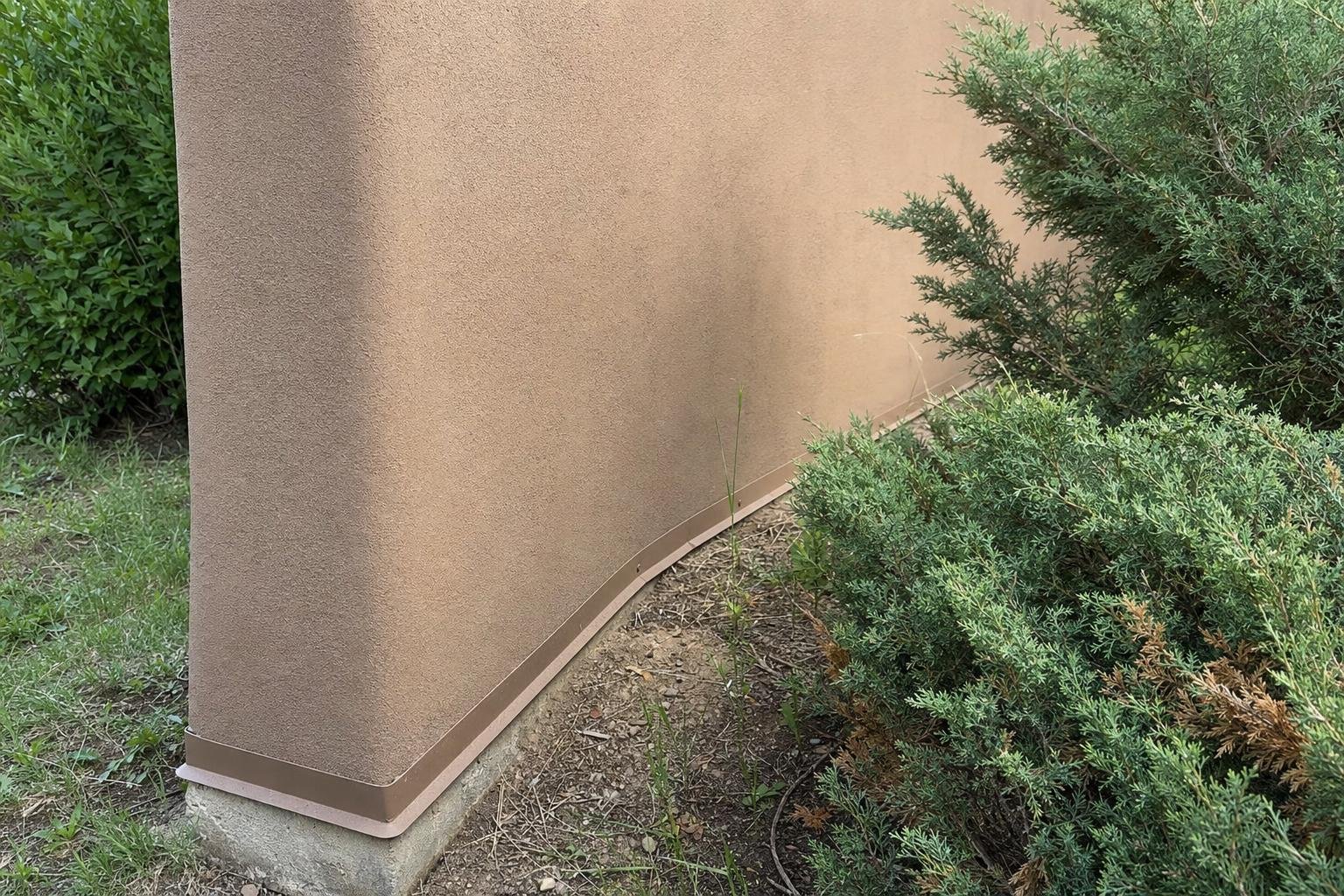
It's not a patch and paint job. In almost every case something above or beside the visible damage let the water in, and until that's fixed, anything we do to the surface is on borrowed time. If you've got a stain that keeps coming back, a section of wall that sounds hollow when you tap it, or cracks that reopen around a window, that's the work this page is about.
What you're seeing, and what it usually means
The calls we get usually start with something visual. A dark streak running down from a roof transition. Stucco that's bubbled or gone chalky in one area while the rest of the wall looks fine. Cracks at a window or door corner that you filled once and that came back. Sometimes it's inside: a stain on the drywall at a window head, or paint that keeps lifting in the same spot. A hollow sound where the wall should be solid is another.
None of those signs tells us on its own how far the water has travelled. A small stain outside can mean a big wet area behind it, and a stain inside can come from a wall on the other side of the room. What the signs do tell us is where to start looking. A single hairline crack in an otherwise sound wall is often just a crack. The ones that worry us come back after you fill them, or sit near a window, a door, or the point where the roof meets the wall. Santa Fe's freezes don't come every night, but when one hits a wall that's holding water, the freeze-thaw movement can reopen a crack you've already filled.
Closely related: stucco hole and impact repair. Want stucco repair in Santa Fe? Our main page lists everything.
Before you book: What Stucco Repair Costs and What Moves the Price · Insurance Claims for Stucco Repair: What to Document
Why the damage is bigger than the stain
Stucco is a layered wall, not a single skin. Once water gets past the outer face, it moves down and sideways through those layers and doesn't need much of an opening to do it. A flashing detail that was never quite right, or a roof transition that's given up, can wet the wall well past the spot where you see damage.
So when we open a wall and find more damage than the outside suggested, that's the usual reason. Water doesn't stay where it lands.
How we find the source
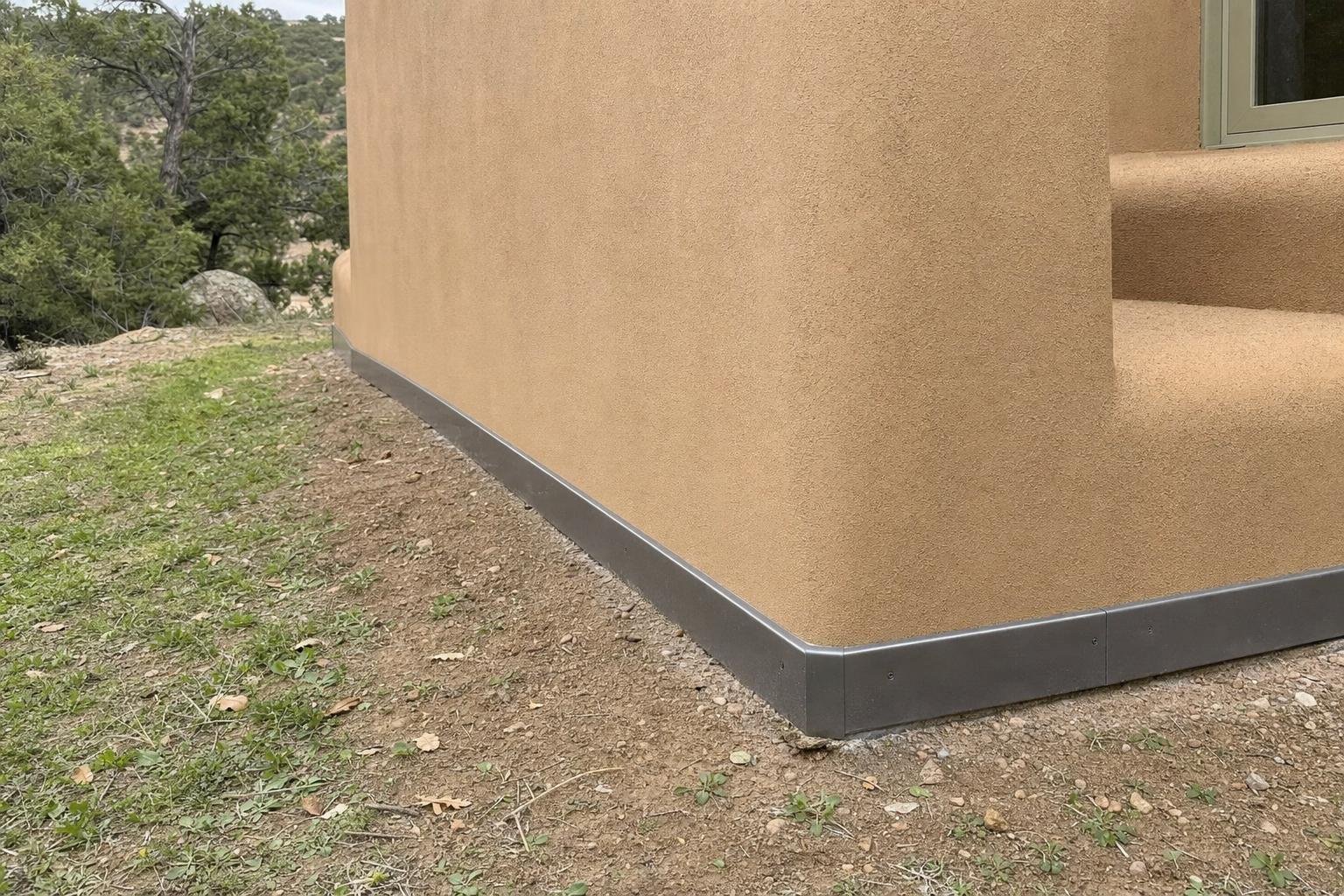
We start above and around the damage, not at it, because the water entry is almost never at the stain. We look at roof transitions and flashing details first, then window and door heads and sills, and work down until we have a sensible explanation for what we're seeing. If it doesn't add up, we keep looking. Rebuilding a wall without finding the entry means we'll be back.
Then we remove stucco in the affected area as needed to expose the wall layers and define the repair boundary. That's where we stop guessing about extent. You can see how far the wet and damaged material actually goes, and we mark a clean edge to build back to.
Sometimes the full scope isn't clear until the wall is open. Before we start, we can tell you where the water is likely coming in and what correcting it will involve.
The repair, start to finish
Before any stucco goes back on, we correct the identified water-entry source. If it's a flashing detail, we repair it. If it's a roof transition, that gets corrected. There's no point rebuilding a wall under an open leak.
Once the source is fixed and the opened wall is ready, we rebuild with three-coat stucco materials, matching the existing assembly as closely as we can. Where the repair reaches a window or door, we install window and door flashing and tie it into what's already on the wall. Flashing that isn't tied in leaves you with a patch that fails at the same spot.
After the repair, the places worth an occasional look are the same ones that let the water in: the flashing around openings, the roof transitions, and anywhere the wall meets something else.
What it costs
Water-damage stucco repair runs about $25 to $45 per square foot.
The top of the range comes with a large removal area (often more than the visible damage suggests), work that's high or hard to reach, several windows or doors in the repair area since each one needs flashing work, and multiple patches instead of one. The source repair shifts the number as well. A flashing repair at a window head is a different scope from a roof transition.
What keeps a job at the lower end is catching it early: damage that's stayed local, one opening, easy access, and a source that's simple to correct. Water that has sat in a wall for a while is rarely a small job.
How long it takes
Timing depends on the wall, so we set the schedule after we've seen it. The size of the area is the biggest factor, since it sets how much stucco comes off and goes back. Three-coat stucco goes on in stages, so the rebuild takes longer than a one-visit patch. Weather also decides which days we can work.
The source correction is its own piece of the schedule. A flashing repair is a short one. A roof transition adds more. We'll walk the wall with you, tell you what we expect to find, and lay out the sequence so you can plan around it.
What Goes Into the Work
In detail, expect steps like these:
- Inspect the affected wall and nearby openings, flashing, sealant joints, and drainage to trace the likely water path. [2]
- Use moisture meters and thermal imaging to locate moisture intrusion. [1]
Also Available
Ring us and describe what's going on, and you'll get a straight answer.