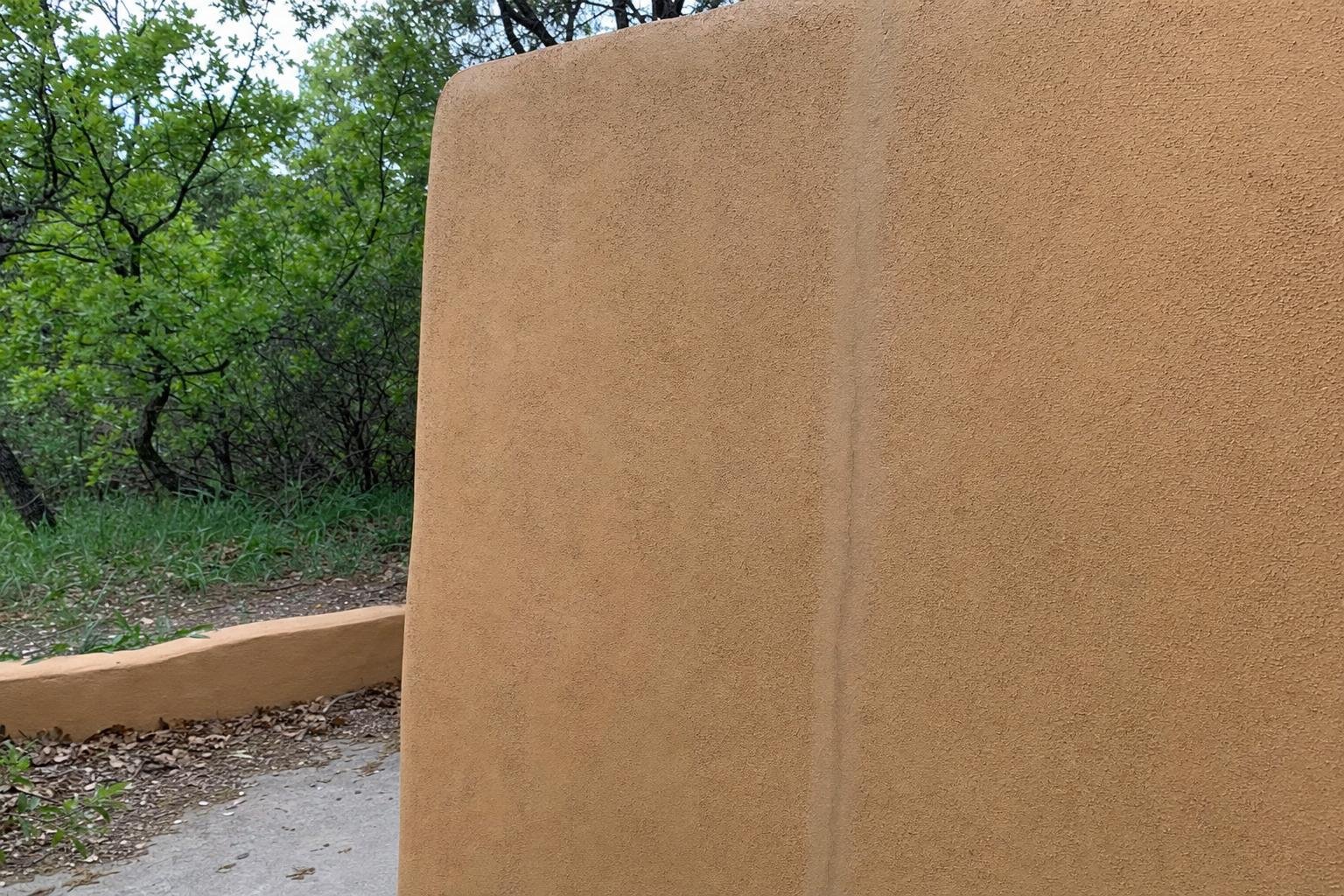
Some are cosmetic and some let water in, and from the outside they can look much alike. Crack repair is the work of opening a crack up, filling it properly, and blending the fix back into the wall so it doesn't come back or stand out. If you've got a line running from a window corner, a split along a parapet, or a few scattered cracks on one wall, this is the job we do.
Cracks that are worth a call
The ones people notice first are the cracks that run off the corners of windows and doors, since those are where a wall flexes most. Then there are the ones you can see a shadow in, meaning the crack has enough width to catch light. If you can slide a fingernail into it, or if the stucco on either side sits at slightly different levels, it's past hairline and we'd want to look at it.
Storms are a good reason to walk your walls. Santa Fe County's hazard plan rates seasonal thunderstorms with hail as highly likely, and notes that hail can damage roofs and buildings. It also warns that high winds can hurt older buildings because of how they were built. So after a hard storm or a windy stretch, we'd look at exposed corners and parapets first, and at any stucco that took a direct hit. A crack that wasn't there last month is more useful to us than one that's been there for years, because it tells us something moved recently.
The truth is a lot of cracks are harmless on their own. What matters is whether water can get behind the surface, and that's what we're really judging when we look.
A common next step is stucco water damage repair. Need stucco repair in Santa Fe for another job? Start on our home page.
Worth a read: Insurance Claims for Stucco Repair: What to Document · Warning Signs You Need Stucco Repair
Reading a crack before we fill it
We look at width, direction, and whether it's one crack or a pattern. A single isolated crack is a different problem from several cracks fanning out from one spot. We also check how the stucco sounds and feels around it, because a crack with hollow or loose material on either side needs more than a fill. Parapets and exposed corners get extra attention, since wind and weather hit them from more than one side.
Then we decide whether this is a localized repair or something bigger. If it's a few isolated cracks, the repair is straightforward and the price stays small. If the wall is cracking broadly or coming loose, we'll say so plainly, and that's a conversation about a larger repair, up to and including new stucco over a section. We won't dress that up as a simple crack fill, because it wouldn't last.
How we fix a crack so it stays fixed
We open the crack by routing it, so the filler has something to grip rather than just sitting on a hairline. After cleaning it out, we apply the first fill and leave it alone for at least 4 hours. Then we apply a second layer and smooth it, and that one needs at least 12 hours to dry. Rushing those times is the usual reason a patch shows up again as a faint line.
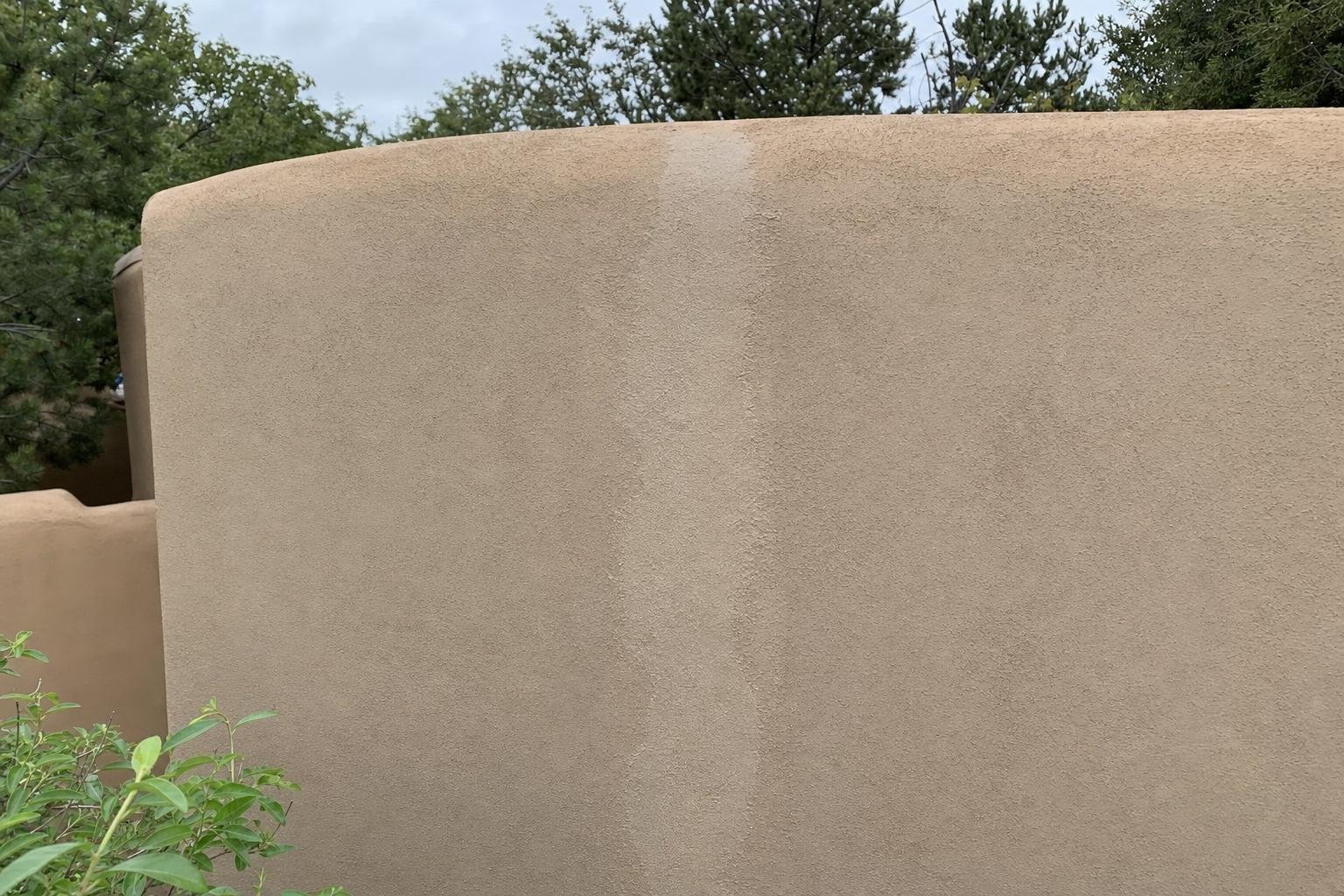
When the repair calls for a coating, we put on two coats of elastomeric coating at about 16 wet mils per coat, with a brush or roller. We carry the coating to an architectural break or across the whole elevation. It's a bit more work than dabbing paint on the spot, but a coated patch on an otherwise untouched wall tends to show, and carrying the coating to a natural stopping point hides the difference. Glass-fiber reinforcing mesh is part of our kit for the repairs that need extra reinforcement across the crack.
Because of those drying windows, the job doesn't happen in one afternoon. The fills alone take at least a day and a half of waiting, and the coating comes after. How long it runs overall depends on how many cracks there are and how much wall gets coated.
Pricing for isolated cracks
For localized crack patching in isolated areas, the range we work with is $175 to $550 for the project. That's a range for a handful of cracks in one area, not a wall-wide fix.
What pushes the number up is the count of cracks, how long and wide they are, and how hard they are to reach. A crack at a second-story parapet costs more to work than one at eye level. A coating that has to run across a full elevation, so the repair blends in, adds time and material over a spot touch-up. What pulls it down is a short list of tight, shallow cracks on a wall with a natural break nearby.
If we open a crack and find loose or damaged stucco underneath, the job grows, and we'll tell you before going further rather than after. Our written quote covers the cracks we looked at and the coating extent we plan on.
Questions we hear a lot
Can I just caulk it? We'd rather not. A surface bead covers the crack without giving the repair anything to hold, so the crack tends to reopen along the same line. Routing and filling in two layers is what holds up.
Will the patch show? It can, which is why we carry the coating to a break in the wall or across the elevation. Matching a patch exactly to old weathered stucco is hard, and we'd rather blend the whole wall surface than leave a visible square.
Is this the same as putting up new stucco? No. Installation is for new walls or large areas that have failed. Crack repair is for a sound wall that has split in places, and knowing which one you have is the first thing we sort out.
Parts of the Job
In plain terms, it tends to involve:
- As an alternate treatment for cracks up to 1/16 inch wide, work patching compound fully into the crack with a small damp sponge and slight hand pressure.
- For static cracks 1/16–1/4 inch wide, rout the crack to 1/4 inch wide before filling.
Also Available
Call and tell us what you're dealing with, and there's no obligation.