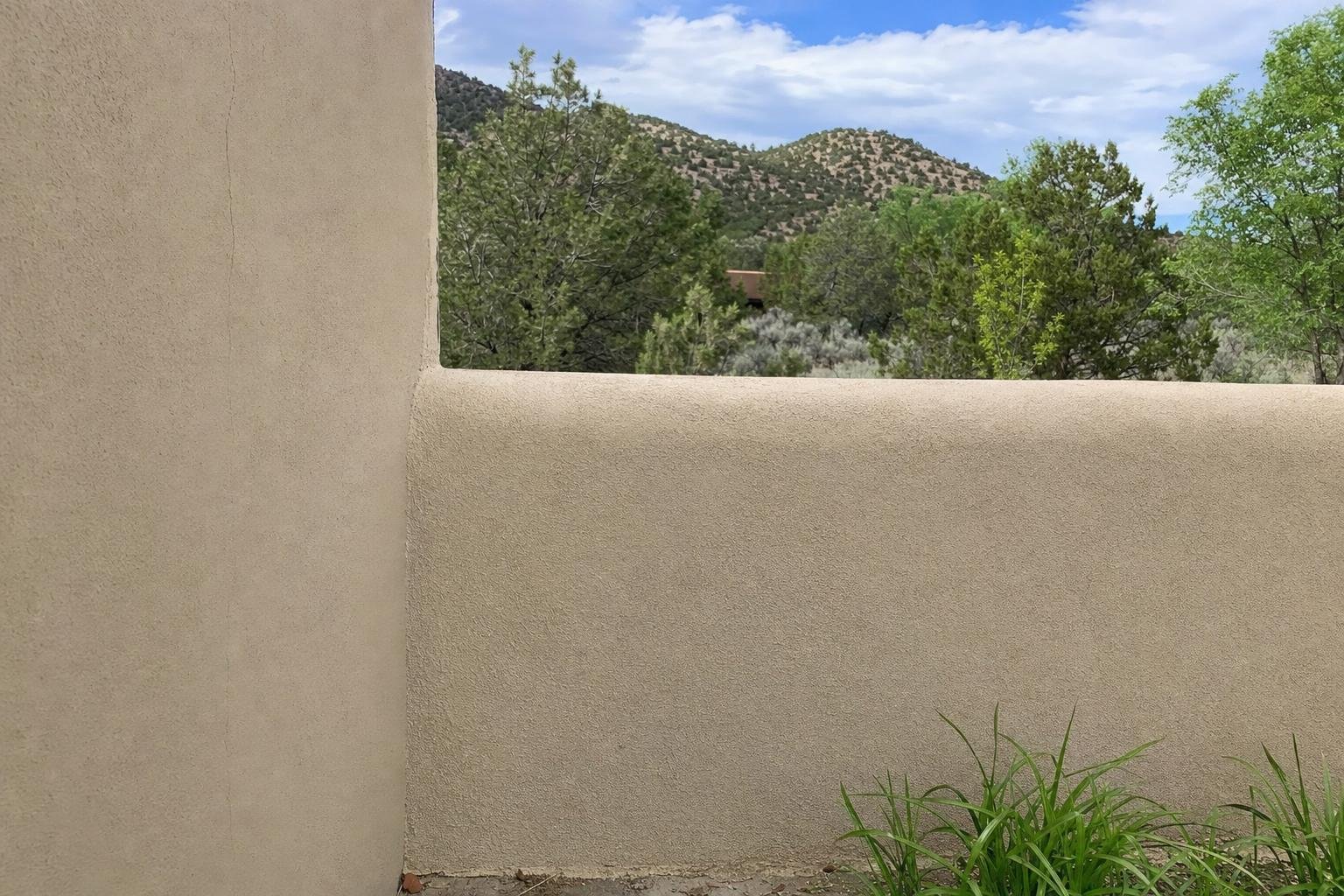
Once a crack opens, water gets in behind the finish and works deeper into the wall. We handle small patches and the crack repairs that come with them, plus deeper repairs where the failure has gone past the surface, so the wall sheds water again instead of holding it against the house.
The signs that make people pick up the phone
Most calls start with something small and specific. A crack you've filled twice and it keeps coming back. A crack wider at one end than the other, which usually means it's still moving. Finish that feels soft, looks stained or goes darker after rain, or crumbs of material on the ground under a wall. Sometimes nothing is wrong on the wall itself, but dirt has washed out from the base in the last storm and you want to know if the wall is next.
There's a slower set of signs too. An old patch that no longer blends in. A stain that spreads a little further every time it rains. A spot that sounds or feels different from the wall next to it. None of these is an emergency, and we'd rather look early than come out after a piece has let go.
The jobs we describe on this page are small, localized repairs of roughly 1 to 10 square feet. If the area you're worried about is bigger than that, it's no longer a patch, and we'll talk about it differently when we come out.
Many projects also need stucco crack repair. Shopping for stucco repair in Santa Fe? Our home page has more.
Related reading: Warning Signs You Need Stucco Repair · What Stucco Repair Costs and What Moves the Price
What water does once it's behind the finish
The finish itself is tough. The trouble starts at the edges of a failure, where water gets into a crack or a spot where the material has separated and sits against the wall. We get occasional hard winter freezes in Santa Fe, and that's what does the damage. Water in a crack freezes, expands and opens the crack wider. Then it thaws, more water gets in, and it happens again. Over a few seasons, a narrow line turns into an open one.
We can't tell from the ground how far a failure runs past the visible damage. Sometimes the material is still bonded and only the surface has failed, which is a shallow repair. Sometimes the surface is just the last part to give out, and the problem runs deeper. The two need different materials and different amounts of work, which is why two patches that look the same size can land at opposite ends of a price range.
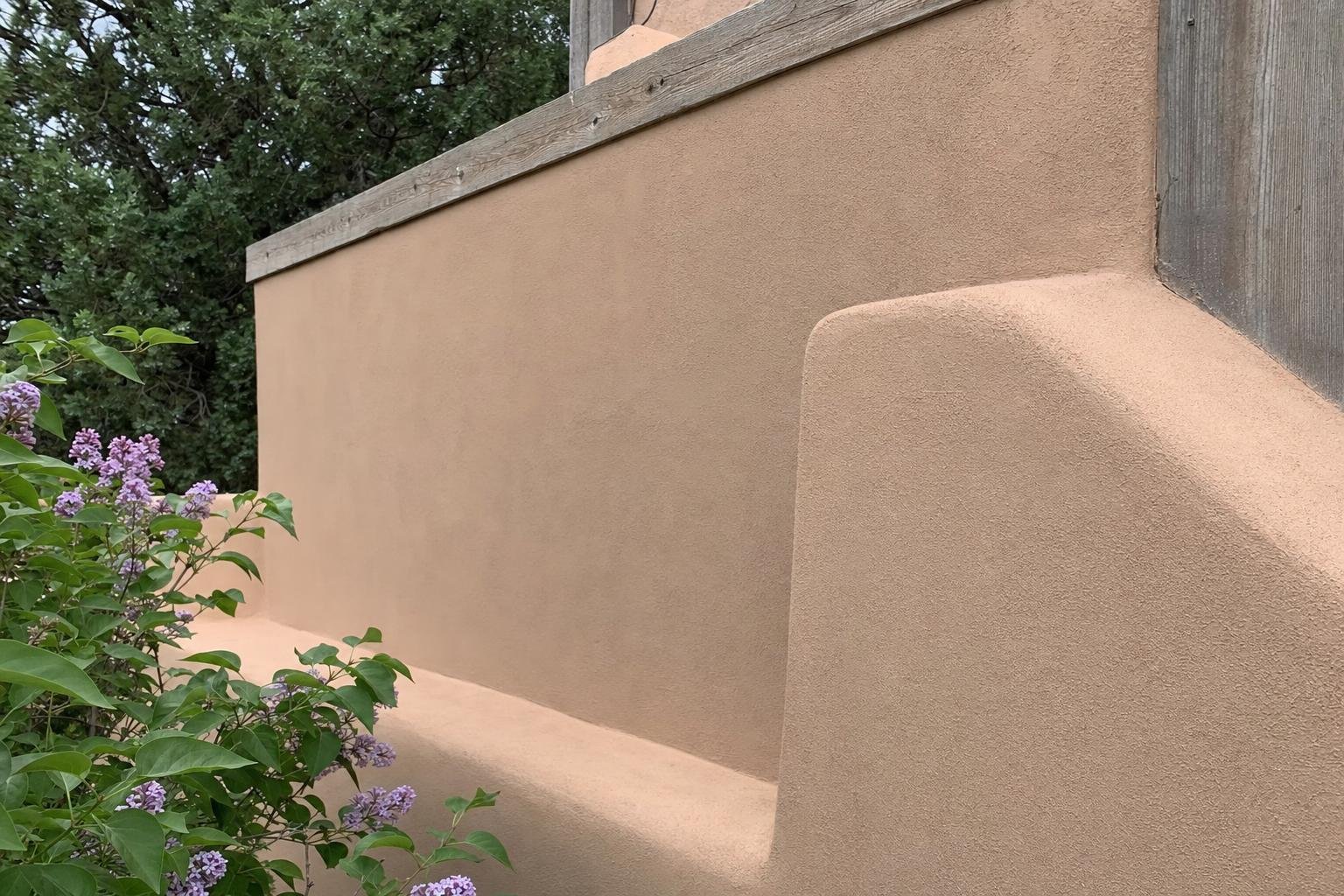
How we do the repair
Before any material goes on, we decide whether the failure is a shallow surface repair or a deeper one, and we mark how far it runs. We measure the area we'll actually be working on, not just the crack, and note whether it's one spot or several.
We apply an acrylic bonding agent to the area first so the new material has something to grip. For a shallow repair, we press premixed patch into the area and work it with a margin trowel and a flat finishing trowel, tight into the edges. For a deeper one, we mix stucco material and build the repair in coats instead of filling the full depth at once. We score the scratch coat before the next coat goes on so the layers lock together instead of sitting on top of each other.
A shallow repair is a short visit. A deeper patch built in coats takes more than one visit, because the coats go on in stages. If we told you it could be done in one pass, we'd be rushing it, and a rushed deep patch tends to fail at the layer lines.
What a small patch costs, and what moves the price
A small localized patch of 1 to 10 square feet typically runs about $225 to $800. The range is wide because the same square footage can be a light surface repair or a patch built up in coats.
Depth is the biggest factor, since a deeper patch means more material, more coats and more than one visit. Next is how much of the wall around the visible damage turns out to be unsound, and whether it's a single area or several. Matching the finish to the surrounding wall adds work too, especially on an older wall that has weathered.
A job near the bottom of the range is one small, shallow spot with sound material around it. Each quote states the area in square feet and whether the patch is shallow or built in coats. If the job turns out bigger once it's opened up, you'll hear it from us before we keep going.
Weather, drainage and timing
Exterior stucco work here has windows in the year. Santa Fe's first frost typically comes between late September and mid-October, and the last between late April and mid-May, so we plan repairs around those cold-weather dates. If you call inside that stretch, we'll tell you what can be done now and what should wait for spring.
Water is the other half of it. Santa Fe's normally dry arroyos, including the Arroyo de los Chamisos, can turn into torrents after a thunderstorm, and uncontrolled runoff causes erosion. On every job we look at where water goes when it rains hard. If it's washing against a wall or along a foundation, patching the crack without redirecting the water just means we'll be back. Sometimes the most useful thing we do is point out that the drainage needs attention first, so the repair holds.
Questions we get asked
Will the patch match the rest of the wall? It depends on the existing texture and how much the wall has aged. We can get close, and we'll tell you up front what the match will likely look like. On an older wall, a slightly visible repair is a realistic outcome.
Can the crack come back? Yes, if the movement that opened it is still happening or water still finds a way in at that spot. That's why we look at drainage along with the crack, and why we'd rather fix the cause than keep filling the same line every couple of years.
How much will it cost? Call and we'll talk you through where your job likely falls in the range above. The exact price comes after we see it.
Can you work in winter? Within the frost dates above, we'll tell you what can go ahead and what can wait.
What to Expect to Pay
Treat these figures as a planning guide, and the details of your job set the actual number.
$7–$18 per sq. ft.
$225–$400 per hole
$25–$45 per sq. ft.
What the Work Involves
For work like this, the work usually includes:
- Inspect the patch area and identify the stucco system so the repair material is compatible with the wall.
- Use a hammer and cold chisel to remove crumbling stucco until the edges are solid and firmly bonded.
Also Available
Talking it through by phone takes a few minutes, no pressure, no obligation.